
This series of articles seeks to examine the character attributes of highly successful leaders, regardless of their adherence to a strong faith or moral standard. In presenting these thoughts, Leadership Ministries is not agreeing with or advocating these traits or practices, but rather presents these as ideas for discussion and development in your own leadership journey.
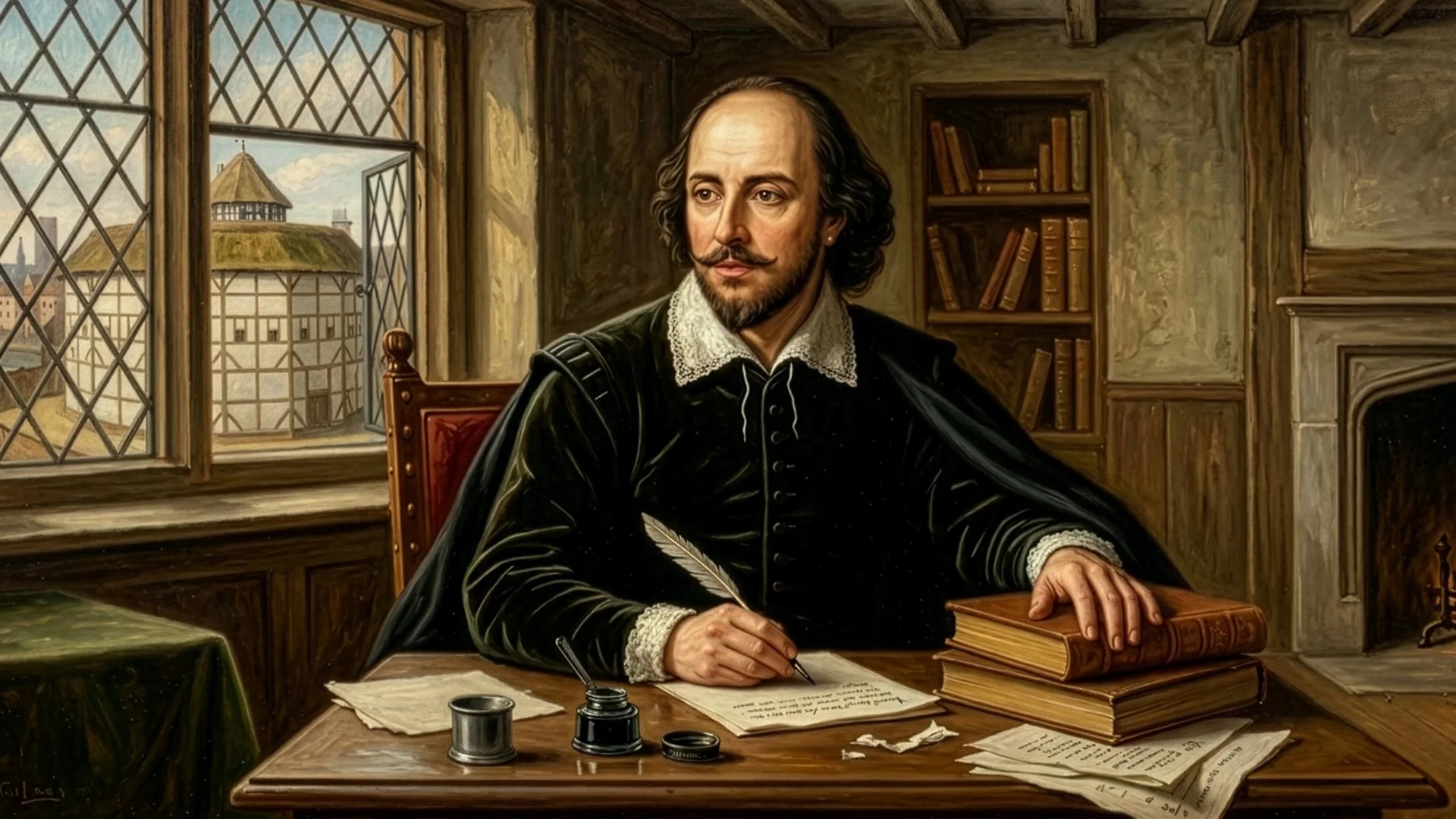
William Shakespeare (1564-1616) was an English playwright, poet and actor, widely regarded as the greatest writer in the English language. His works include plays, sonnets and other narrative poems. He remains the most influential writer in the world, and his works continue to be studied and reinterpreted some 400 after his death. Shakespeare was born in 1564 in Stratford-upon-Avon, England. He was son of a glove-maker and local civic official, and grew up in a modest but stable household that afforded him access to grammar school, where he studied Latin and classical literature.
At eighteen, he married Anne Hathaway, and the couple had three children. Not long after, Shakespeare moved to London. By the early 1590s, Shakespeare had established himself as an actor and playwright in London’s thriving theatrical scene. He became associated with the Lord Chamberlain’s Men, a company that later became the King’s Men under the patronage of King James I. His involvement in both the creative and business sides of the theater set him apart from many of his contemporaries.
Shakespeare was not only a writer but also a shareholder in the company and a part-owner of the Globe Theatre, where many of his plays were performed. This dual role gave him both artistic freedom and financial stability, allowing him to produce a remarkable body of work that includes tragedies such as Hamlet, Macbeth, and King Lear, comedies like A Midsummer Night’s Dream, and historical narratives including Henry V.
A master storyteller. Shakespeare’s enduring influence lies in his ability to capture the complexities of human nature through language. His characters speak with clarity, emotion, and insight, making their struggles and motivations relatable. A reason Shakespeare is studied by leaders today is to learn his ability to communicate vision, values, and strategy in a way that resonates deeply with others. Leaders who can tell compelling stories—who can frame challenges, inspire action, and connect emotionally—are far more effective in aligning teams and driving change. Shakespeare’s work demonstrates that language, when used skillfully, is one of the most powerful tools of influence.
Responding to the audience’s needs. The London theater landscape of Shakespeare’s time was highly competitive, with audiences ranging from common laborers to royalty. Shakespeare succeeded because he wrote for all of them. His plays combined humor, drama, philosophy, and spectacle, ensuring broad appeal. He also adapted his themes and styles over time, responding to shifts in political climate and public taste. Shakespeare’s ability to read his audience and adjust accordingly underscores the importance of staying attuned to the needs of people, and being skillful to evolve and grow in business and life.
Creativity and execution. While he is often celebrated for his imagination, Shakespeare’s success was also the result of consistent output and practical business acumen. He wrote 39 plays and nearly 150 sonnets over a relatively short period, all while managing responsibilities as an actor and manager. This level of productivity required structure, focus, and collaboration. He worked closely with fellow actors and writers, contributing to a creative environment that balanced innovation with performance demands. His success underscores that artistic creativity alone is not enough. Ideas must be developed, refined, and delivered with consistency and quality. Building systems that support both innovation and execution is essential for sustained success.
It is also worth noting that Shakespeare’s life contains elements of uncertainty and potential weakness, particularly in what historians refer to as his “lost years”—a period between 1585 and 1592 where little is known about his activities. This gap highlights a truth: even the most successful individuals experience periods of obscurity, doubt, or transition. Periods of uncertainty can be helpful, providing a means for growth and redirection. Rather than viewing such times as failure, they can be reframed as necessary steps toward clarity and impact.
In his later years, Shakespeare returned to Stratford-upon-Avon, having achieved both financial success and widespread recognition. He invested in property and lived as a respected member of his community. He died on April 23, 1616, at the age of 52. The exact cause of his death is not known. He was buried in the chancel of Holy Trinity Church in Stratford-upon-Avon, where his grave remains a site of literary pilgrimage. An inscription on his tomb famously warns against moving his bones, adding a final touch of personality to his legacy. Shakespeare’s life, though separated from us by centuries, continues to offer practical insights for today’s leaders: that mastery of communication, adaptability to changing environments, and disciplined creativity are timeless principles that drive both influence and enduring success.








Cover Photo: Adobe Firefly
William Shakespeare was an English playwright, poet and actor, widely regarded as the greatest writer in the English language. His works include plays, sonnets and other narrative poems.