This series of articles seeks to examine the character attributes of highly successful leaders, regardless of their adherence to a strong faith or moral standard. In presenting these thoughts, Leadership Ministries is not agreeing with or advocating these traits or practices, but rather presents these as ideas for discussion and development in your own leadership journey.
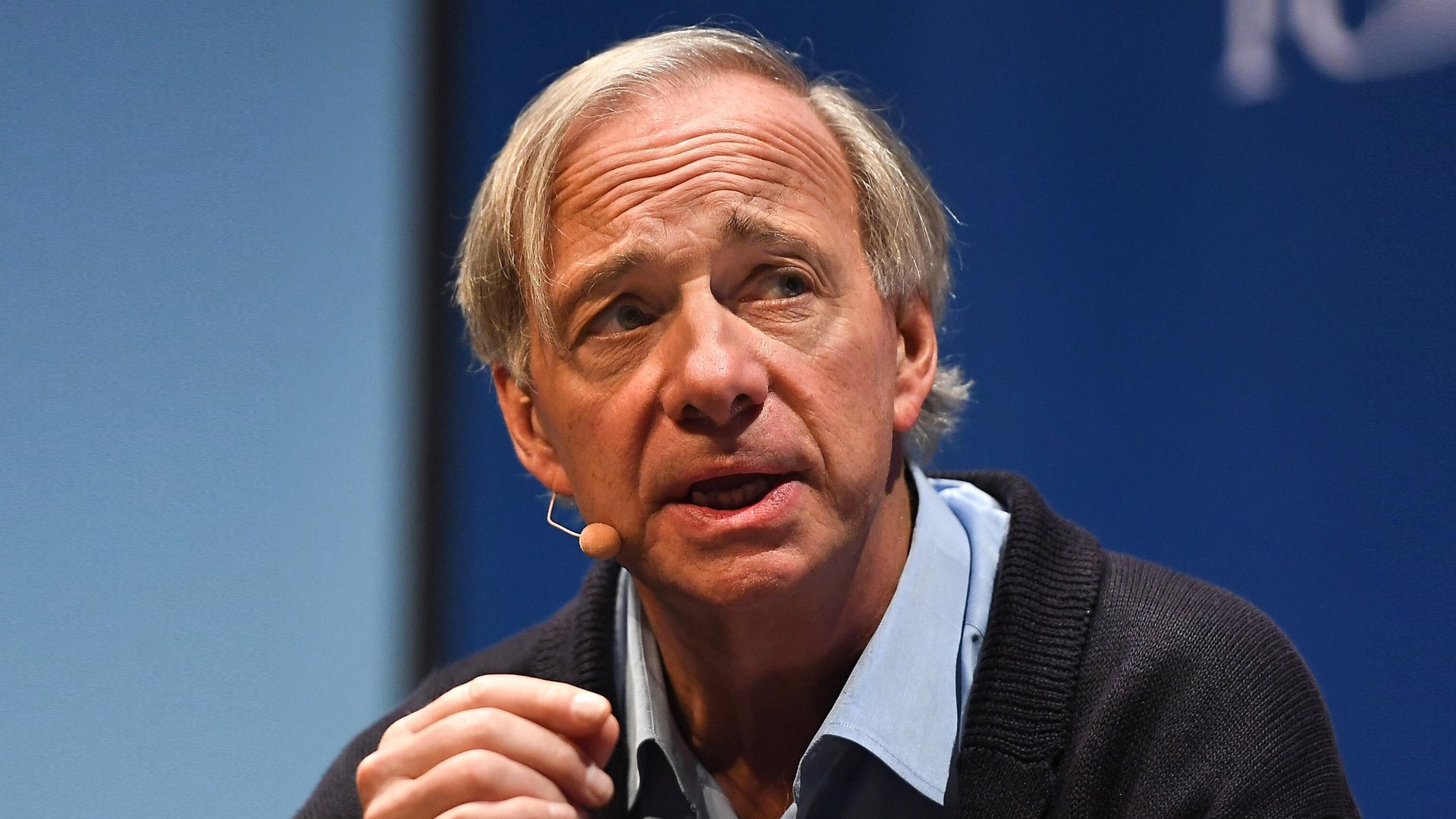
Ray Dalio (1949 - ) is an American billionaire. He is the founder of Bridgewater Associates, the world’s largest hedge fund, and has run it since 1975. Dalio is the author of Principles of Life and Work, a 2017 New York Times bestselling book on corporate management and investment philosophy. As of 2025, Dalio is estimated to be worth $19.9 billion, ranking him as one of the richest people in the world. His firm has more than $92 billion in assets under management.[1]
Dalio was born in New York and grew up doing various odd jobs, from mowing laws to shoveling snow. He began caddying at a local golf course for many Wall Street professionals. One friend he met on the course gave him a summer job at a trading firm. By age 12 he had made his first investment, and in high school his portfolio was worth several thousand dollars. He earned a bachelor’s degree in finance at Long Island University, and an MBA from Harvard Business School. Following graduation, Dalio worked as a clerk at the New York Stock Exchange.
Embracing reality. Dalio writes to “Face the world as it is, not as you wish it to be.” He encourages the reader to “accept uncomfortable truths and use them as data for better understanding and action.” Dalio built his firm to invest around current economic trends, such as exchange rates, inflation and GDP growth. Dalio’s company predicted the 2008 economic crisis, and their strategy saw significant returns during the period, even as other companies floundered or folded altogether. His understanding of the dynamics at pla
Overall, the Dalio family has donated more than $5 billion to his Dalio Foundation, and the foundation has given out more than $1 billion in charitable grants. In April 2011, Dalio and his wife joined the Giving Pledge, vowing to donate more than half his fortune to charitable causes within his lifetime.[2] Dalio wrote, “I learned that if you work hard and creatively, you can have just about anything you want, but not everything you want. Maturity is the ability to reject good alternatives in order to pursue even better ones.”
Learning from mistakes. Dalio wrote, “Mistakes are not failures but opportunities to learn.” He also coined the formula “Pain + Reflection = Progress.” While Dalio has stated that capitalism is generally the best economic system, he has argued that it needs to be reformed. Dalio also has warned about the emergence of China as a global economic superpower. Though he puts much faith in his investment strategies, Dalio is irreligious, and practices transcendental meditation.
Dalio postulates that truth often comes from painful experiences. He wrote, “Every time you confront something painful, you are at a potentially important juncture in your life—you have the opportunity to choose healthy and painful truth or unhealthy but comfortable delusion.” He believes that “Truth—more precisely, an accurate understanding of reality—is the essential foundation for producing good outcomes.”
Effective decision-making. In his book, Dalio introduced believability-weighted decision making, which is weight opinions based on credibility and track record, not hierarchy. He likes to surround himself with inquisitive people. He wrote, “Look for people who have lots of great questions. Smart people are the ones who ask the most thoughtful questions, as opposed to thinking they have all the answers. Great questions are a much better indicator of future success than great answers.” He also believes, “Listening to uninformed people is worse than having no answers at all.”
To be effective, Dalio believes, “…you must not let your need to be right be more important than your need to find out what’s true. If you are too proud of what you know or of how good you are at something you will learn less, make inferior decisions, and fall short of your potential.”[3]
Dalio and his wife, Barbara, have four sons. Their oldest son died in a car accident in 2020. His philanthropy centers on teachers and education and public health. He is also founder of OceanX, a nonprofit marine research organization that maps and explores uncharted regions of the oceans.
Ray Dalio is an American billionaire. He is the founder of Bridgewater Associates, the world’s largest hedge fund, and has run it since 1975. Dalio is the author of Principles of Life and Work, a 2017 New York Times bestselling book.
Michael Jordan is a former professional basketball player and businessman. He played 15 seasons in the NBA and won six NBA championships with the Chicago Bulls.
John Glenn was an American Marine aviator, test pilot, businessman, politician, and one of the seven Mercury astronauts. He was the first person to orbit the earth, circling three times in 1962.
Frank Albert Sinatra was an American singer and actor. He was one of the most popular entertainers of the Twentieth Century, with a career lasting over 60 years. He sold more than 150 million records globally.
Orville and Wilbur Wright were two American aviation inventors who are credited with the world first successful airplane. They made their first controlled flight in December 1903 in Kitty Hawk, North Carolina.
George Herman “Babe” Ruth (1895 – 1948) was a professional baseball player whose career spanned 22 seasons. He’s one of the greatest heroes in American culture and considered the greatest baseball player of all time.
Edward McKendree Bounds (1835 – 1913) was an attorney, author and Methodist minister. He is most known for authoring nine books on the subject of prayer. Bounds is widely considered one of the foremost authorities on prayer.
Thomas Paine (1737-1809) was an English-born Founding Father of the United States. An inventor and philosopher, he authored Common Sense, a pamphlet that was influential at the start of the American Revolution.
Ronald Martin Popeil (1935-2021) was an American inventor and marketing personality. His TV infomercials became an overnight staple, and earned him more than $2 billion in sales during his 40-year run. His coined the marketing catchphrase “But wait… there’s more!”
James Watt (1736-1819) was a Scottish inventor and mechanical engineer. He is credited with the first practical steam engine, the Watt Engine of 1776, which helped bring about the Industrial Revolution.
Aristotle (384-322 BC) was an ancient Greek philosopher. His writings cover a broad range of subjects spanning the natural sciences, philosophy, linguistics, economics, politics, psychology, and the arts.
He was between eight and nine years old when he ascended to rule a kingdom. Reigning from 1332 to 1323 BC, King Tut became leader of ancient Egypt. A Pharaoh was a statesman, religious leader, military commander, administrator and steward of the land.
William Whiting Borden (1887-1913) was an American philanthropist, millionaire and Christian missionary. Borden surrendered his life to Christ as a child as a result of the witness of his mother. Borden wrote three phrases in his Bible that defined his life: “No reserves. No retreats. No regrets.”
Dietrick Bonhoeffer (1906-1945) was a German pastor, theologian and anti-Nazi dissident. He was opposed to Hitler’s genocide of the Jews, and ran “underground seminaries” during the war. In 1943 he was imprisoned by the Gestapo. Bonhoeffer was executed in the spring of 1945.
Charlemagne (747-814) united the majority of Western and Central Europe during the Middle Ages. People call him the “Father of Europe,” and the Pope made him the first Holy Roman Emperor.
Charles Haddon Spurgeon (1834 – 1892) was an English pastor of the New Park Street Chapel (later renamed Metropolitan Tabernacle) in London for 38 years. He became known as the “Prince of Preachers” for his spellbinding sermons, which sometimes ran two hours or more.
James Earl “Jimmy” Carter, Jr. (1924 - 2024) was an American politician and humanitarian who served as the 39th President of the United States. Though many believe his presidency a failure, his post-Oval Office years were nothing short of phenomenal.
Saint Nicholas of Myra (270-373) was an early Christian bishop from the city of Myra in Asia Minor during the time of the Roman Empire. That he loved children and was tremendously generous is widely accepted, and gave rise to the modern day tales of Santa Claus.
Nicholas Lou Saban, Jr. is an American football coach, most known for his 17 years as Head Coach at the University of Alabama. He is widely considered one of the greatest college coaches of all time.
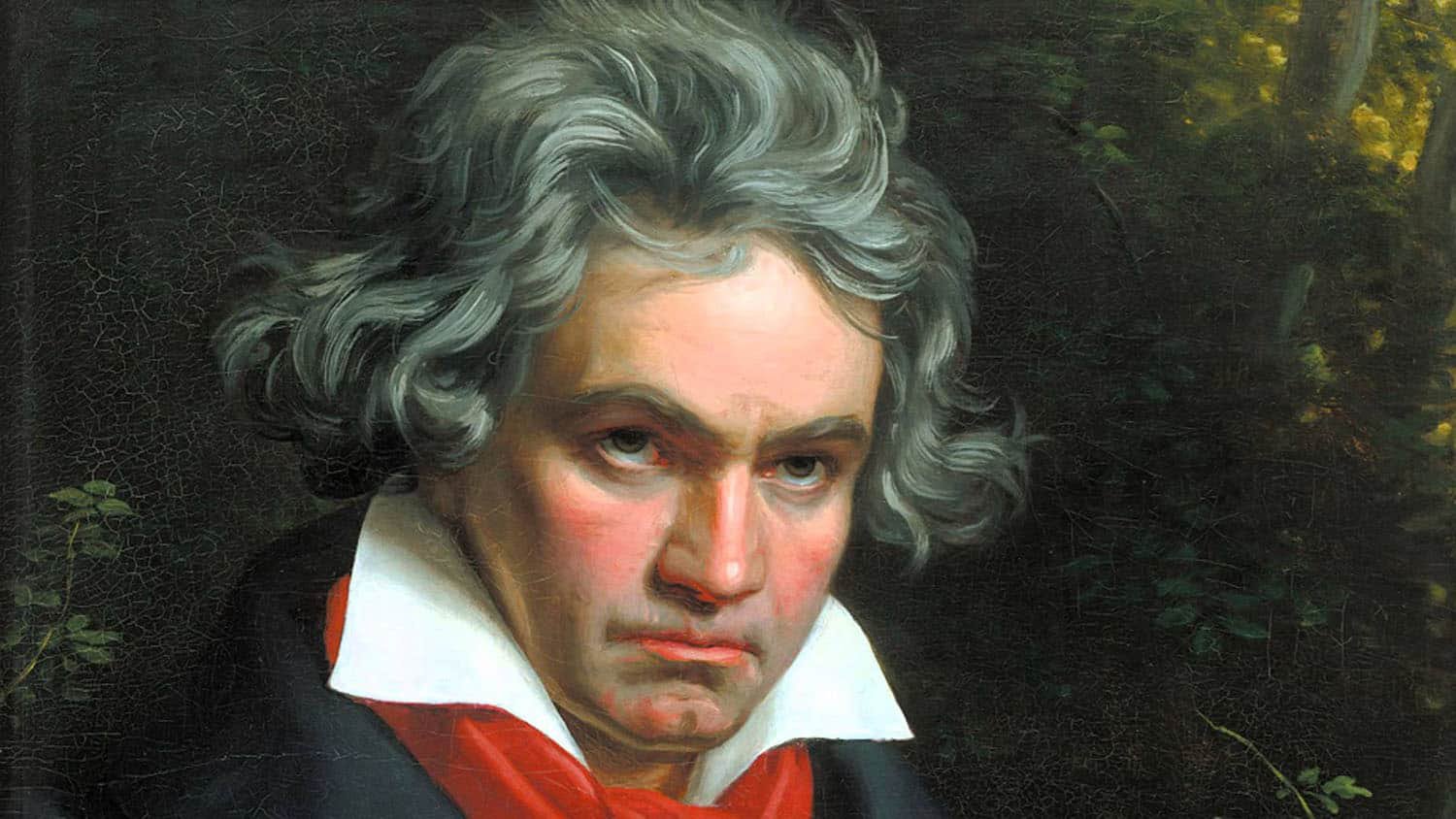
Ludwig van Beethoven (1770 – 1827) was a German composer and pianist. He is among the most admired classical composers in history, and the melodies of his great symphonies and sonatas are recognized around the world.
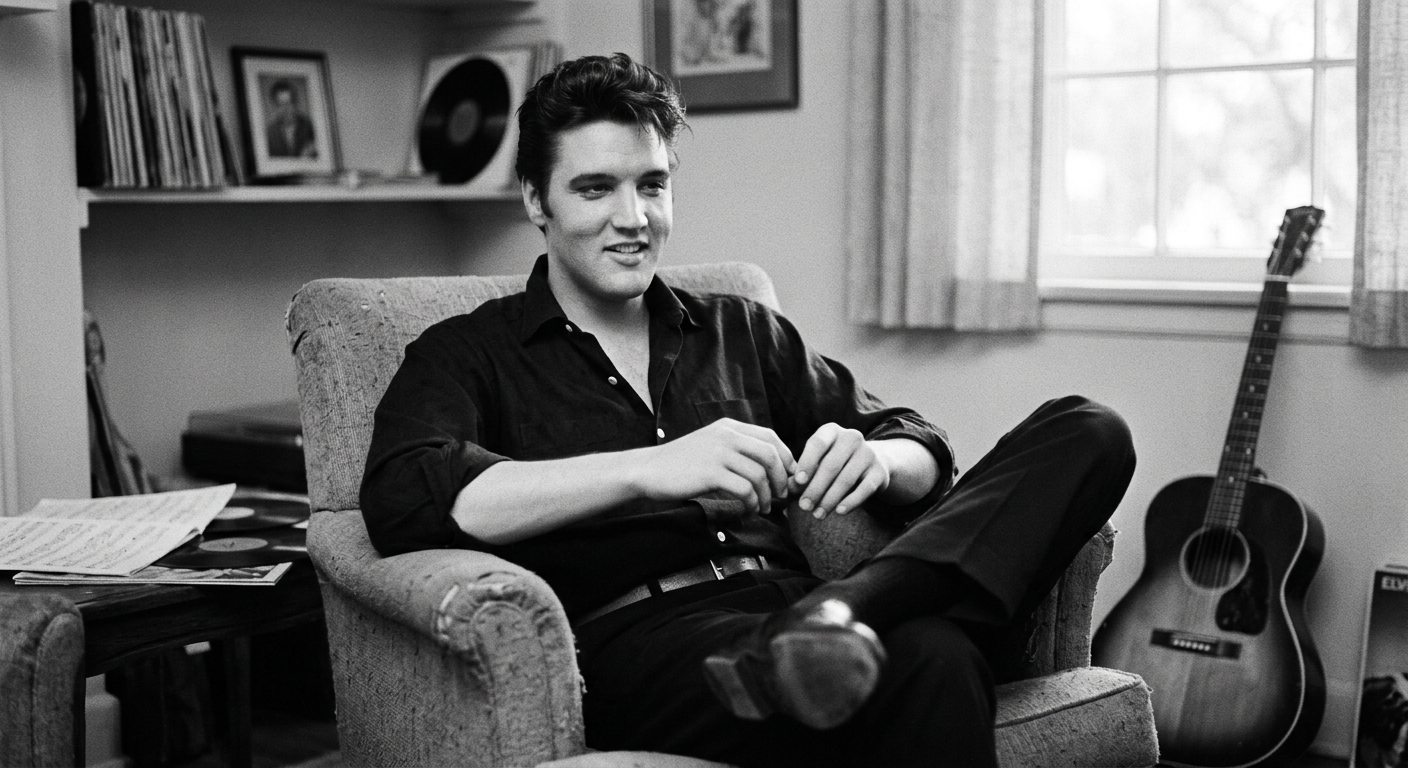
Elvis Aaron Presley (1935 – 1977) was known as the “King of Rock and Roll”. He began his music career in 1954, and over the next 30 years would sell 300 million albums, make 33 movies, and become one of the most well-known and celebrated artists in history.
Sir Timothy John Berners-Lee (1955-) is an English computer scientist, professorial research fellow at the University of Oxford and a professor emeritus at the Massachusetts Institute of Technology (MIT). He is widely credited as the inventor of the World Wide Web.
Howard D. Schultz is an American businessman and author. He served as Chairman and CEO of Starbucks from 1986 to 2000, and again from 2008 to 2017, and in 2022-2023. He was named one of the World’s Richest People by Forbes with a net worth in 2020 of $4.3 billion.
Socrates (470-399 BC) was a Greek philosopher credited with founding Western philosophy and the first among moral philosophers and the ethical tradition of thought. Socrates did not author any texts, and what is known of him is through accounts of other classical writers.
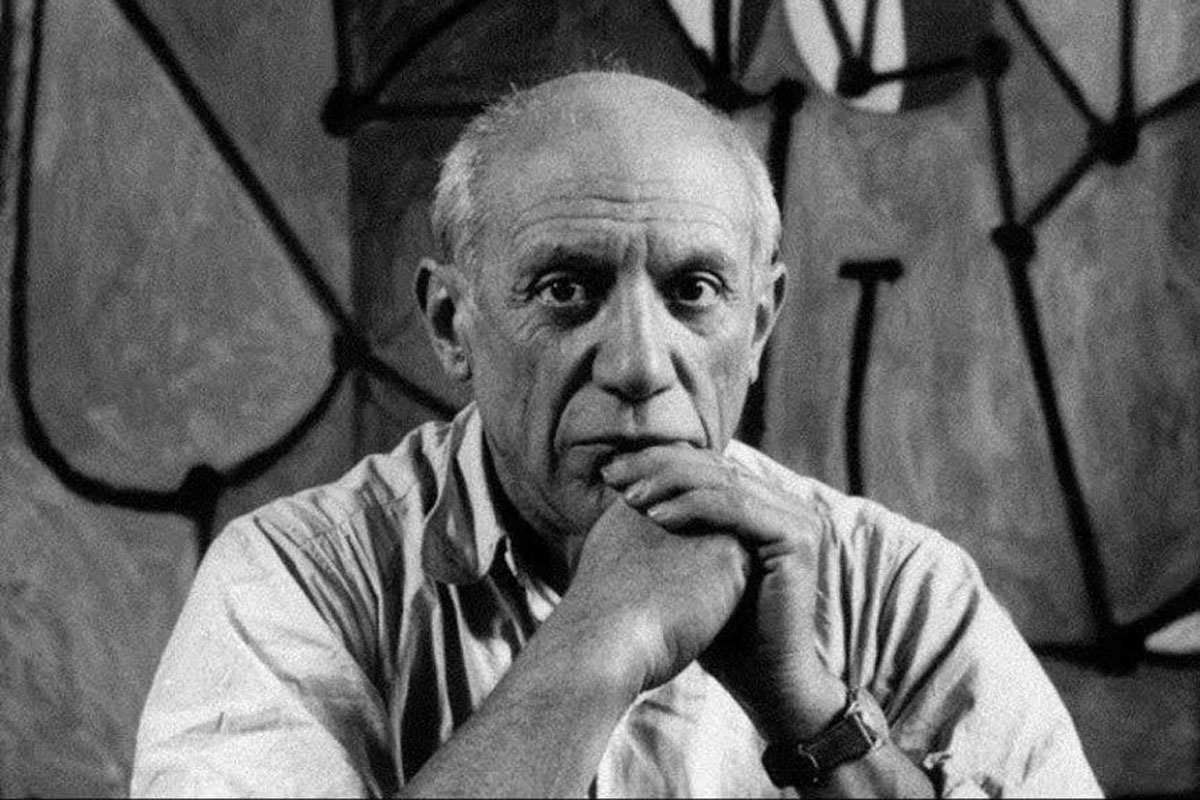
Pablo Ruiz Picasso (1881 –1973) was a Spanish painter, sculptor, printmaker, ceramicist and theatre designer. Picasso demonstrated extraordinary artistic talent throughout his life and is considered the father of modern art.
Neil Armstrong (1930 –2012) was an American astronaut and aeronautical engineer who became the first person to walk on the moon in 1969. He was also a naval aviator, test pilot, and university professor.
Michelangelo di Lodovico Buonarroti Simoni (1475-1554) was an Italian sculptor, painter, architect, and poet of the High Renaissance. He is known for his striking masterpieces, including the ceiling of the Sistine Chapel and the statue of David.
Historians consider Ramesses II (1303-1213 BC) the greatest and most powerful Pharaoh of Ancient Egypt’s New Kingdom period. He lived to be at least 90 and ruled for more than 65 years. During his reign, the Egyptian army is estimated to have totaled some 100,000 men.
Nicola Tesla (1856 – 1943) was an eccentric inventor. Tesla is the inventor of alternating current electricity, radar, x-ray photography, wireless communication, and solar power. His AC power is still the world standard for electricity to this day.
[1] https://www.bloomberg.com/billionaires/profiles/raymond-t-dalio/
[2] https://en.wikipedia.org/wiki/Ray_Dalio
[3] https://www.goodreads.com/author/quotes/5289593.Ray_Dalio
Cover photo: Harry Murphy/Web Summit via Sportsfile, licensed under the Creative Commons Attribution 2.0 Generic license.


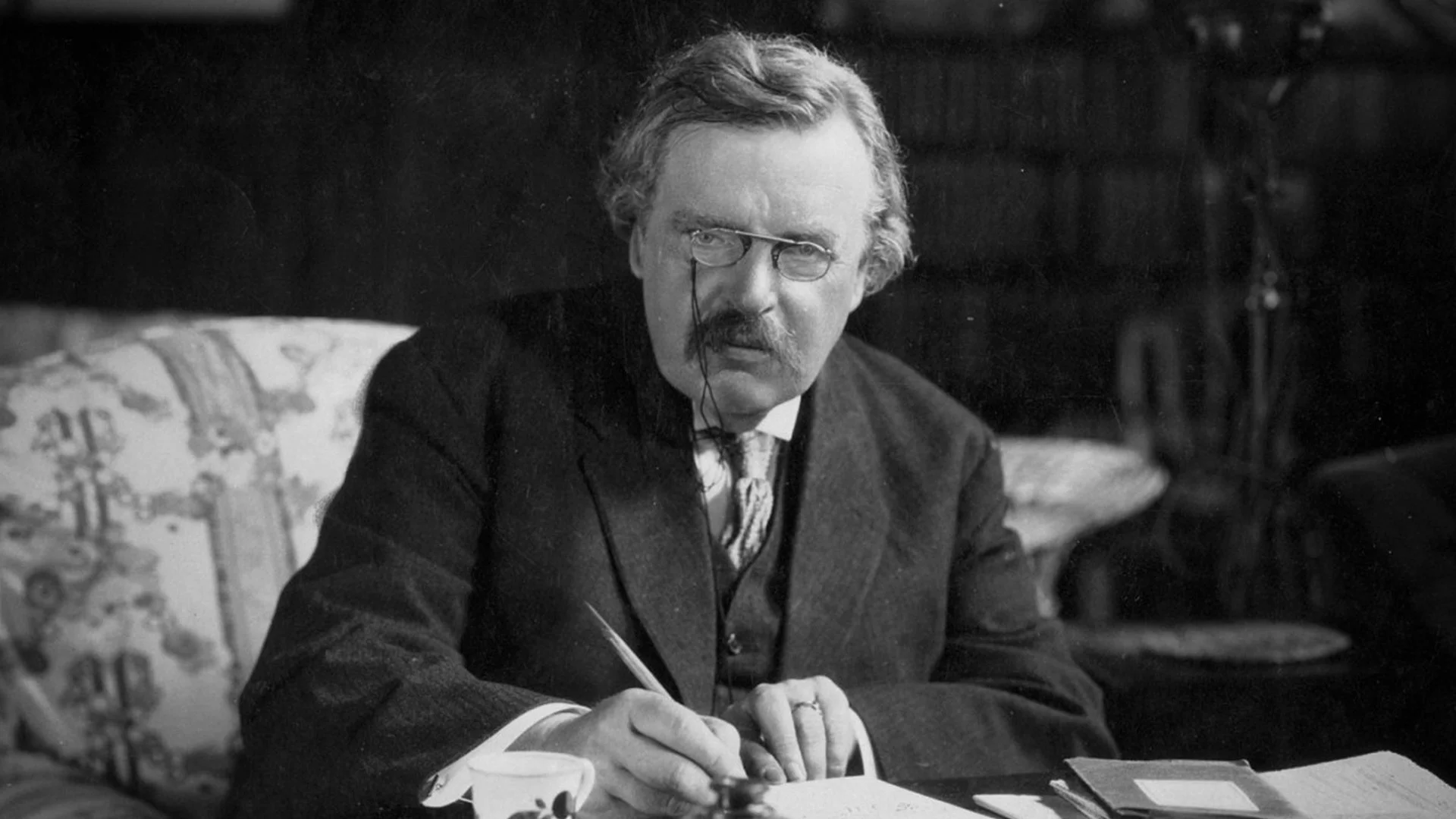
Gilbert Keith Chesterton was an English Apologist. His sharp writing style made him a prominent figure in earth twentieth century literature. Among his works were Orthodoxy and The Everlasting Man.