

More on Spiritual Development












A disciple is a life-long student, one who studies along with others, and then lives out those teachings in daily life. The key to a relationship with Christ is to be a disciple—and also to make disciples.
Discipleship is not designed to be confined to church settings or private devotion. It is a way of life that extends into every arena, including the workplace.
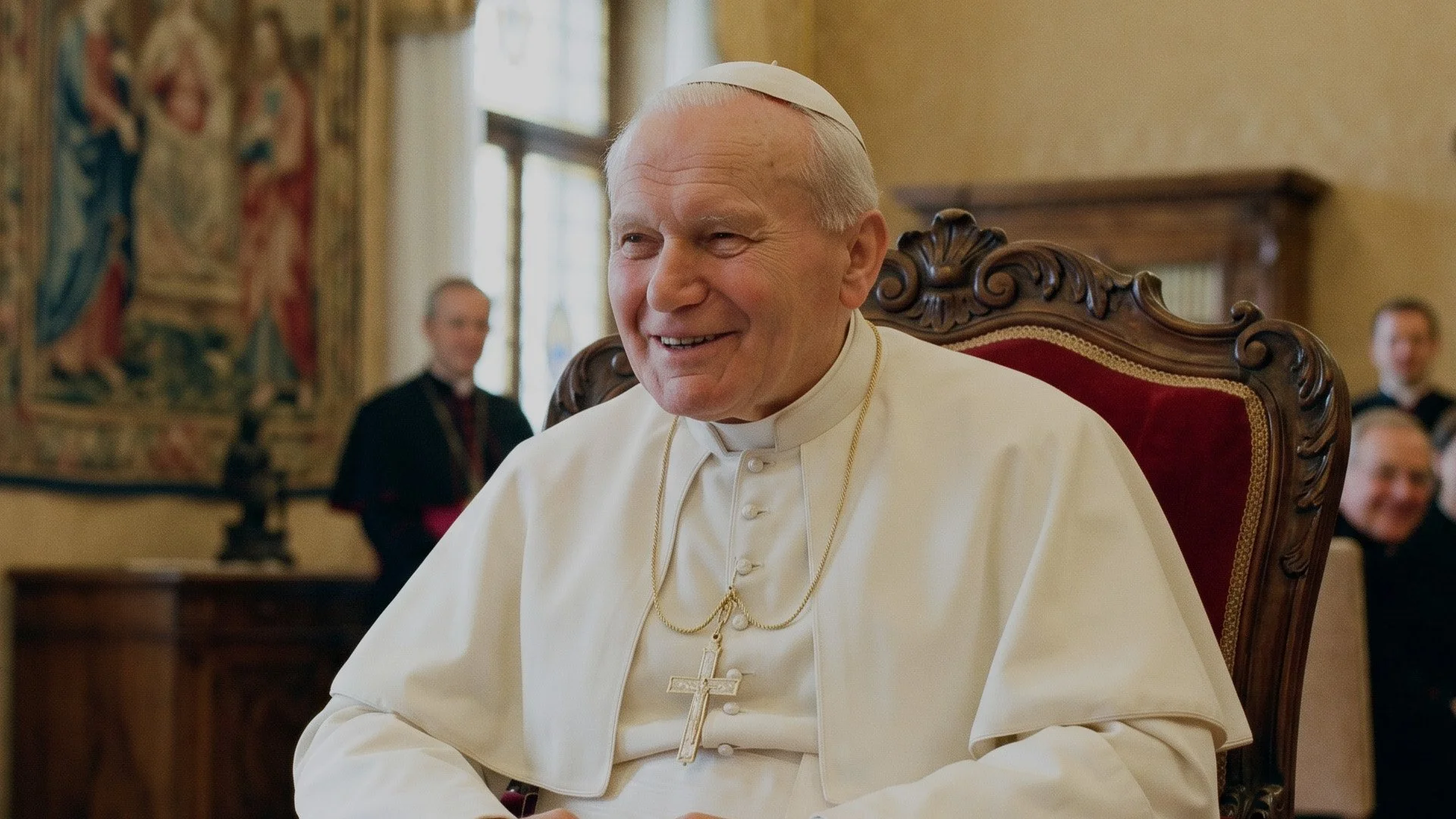
Pope John Paul II emerged from a turbulent period in European history to become one of the most influential global leaders of the twentieth century. Born Karol Józef Wojtyła in Wadowice, Poland, his early life was marked by death and hardship.
As you go through our Life and Career Planning process, you’re investing time in personal development. A great supplement to this journey is to take in some of the experience and wisdom of others.
Authenticity is the factor in your character that helps you live as your true self. Authenticity helps you to make good decisions, influence others, maintain consistent values, convey a sense of purpose, and have a strong self-awareness.
Standing meetings in the workplace have a tendency to meander. Often the opening three minutes of social “catching up” becomes 20 minutes. Then there are the tangents we invariably wander off on.
The smallest computer in 1962 weighed about three tons and consumed enough power to light up a city block. So NASA commissioned the engineers at MIT to do something unheard of.
We all know the physics lesson: “For every action, there is an equal and opposite reaction.” Often we apply this not only to the physical world, but to leadership, decision-making and management.
Your life and work will rise or fall based on your motivation. The reasons behind why you get up each morning and go through the day will direct your steps and eventual outcomes. Movation is the internal drive that compels you to act.
As a business leader you might be looking for an advantage, any “edge” you can use to move your company. Do your religious beliefs and practices affect how you do your job—and might that deeper faith play a role in your business success?
The single most important element of leadership is forming meaningful relationships. It’s not “who you know”, but rather that you have the capacity to really know others.
Many leaders who have a relationship with God want to experience the blessings of God. We ask God for blessings. We pray about it and we earnestly seek God’s best.
We aren’t teaching boys what it means to be a man. They lack not only the knowledge of manhood, but any concept of the responsibilities of a man. In short, males do not know how to live and act as men.
Every leader has an equal amount of one resource—time. How we plan and spend our hours and days can lead us to success or failure. Do you have a strategy for managing your time?
The key facet of leadership development—that is, investing in others for the purpose of seeing them exhibit excellence through their own lives and leadership—is “baked in” to New Testament teaching.
American politics is getting more intense and divisive by the day. The democratic tradition of debate and discourse, leading to compromise and unity, is all but gone in the US. Instead, we gather into tribes based on deeply held political beliefs, we deride the opposition.
What is a healthy view of money and profit? Can we desire financial success, and still serve God with full devotion? It’s really a question of where our treasure—and heart—lies.
As a leader, you’re not over a what, but a who. To lead is to influence others in a way that helps them grow personally, professionally and spiritually. Leadership is fundamentally about influencing people.
One trait we often look for in leaders is the ability to multitask. Smart, capable leaders can handle multiple tasks, priorities and decisions at once, right? No, actually, that’s wrong. There is a limit to the number of things any leaders can process at once.
There are aspects of the Father that go above our heads. Though we can’t possibly know all the ways of God, we can know, in a broad sense, how God’s ways are higher our ways.
One of the greatest investments you can make as a leader will not be found in a stock selection, or emerging technologies, or foreign markets. A leader’s most powerful commodity is his relationships with people.
Once a person surrenders their life to Christ, faith and leadership cannot be separated. It is “baked in”. The difference in Christian leadership is that faith takes point for the leader.
Fulfillment is the happiness or satisfaction that comes from developing one’s own abilities or character. A leader who knows his talents and skills are being put to good use and that he is growing personally and professionally has the mindset that he is stewarding his life well.
An alarming trend is younger workers checking out. Whether from burnout, mental health issues, boredom or self-isolation, more and more workers and leaders and disengaging. What does the Bible say about it?
There is great wisdom in the profitable use of time. For a leader, this takes a certain amount of discipline, and a purposeful desire to use his days for positive and impactful tasks and relationships.
Don’t you wish someone had a set of hard-and-fast rules for leadership? If you just did these things then success is assured! Rules, though, typically come from the hard lessons of experience.
Most workers can easily define what they do on a daily basis. Much harder is to determine why they are doing it, beyond the obvious facet of earning money.
Most people carry a load of baggage through life. Past mistakes, relationships, decisions, circumstances weigh us down. Here’s how to let go.
Your leadership can not only benefit from prayer, but you can use prayer as a tool to develop others.

Scripture presents a pathway to influence—one that runs through humility, surrender, and even brokenness. This idea is uncomfortable because it challenges the instinct to protect image and maintain control.