
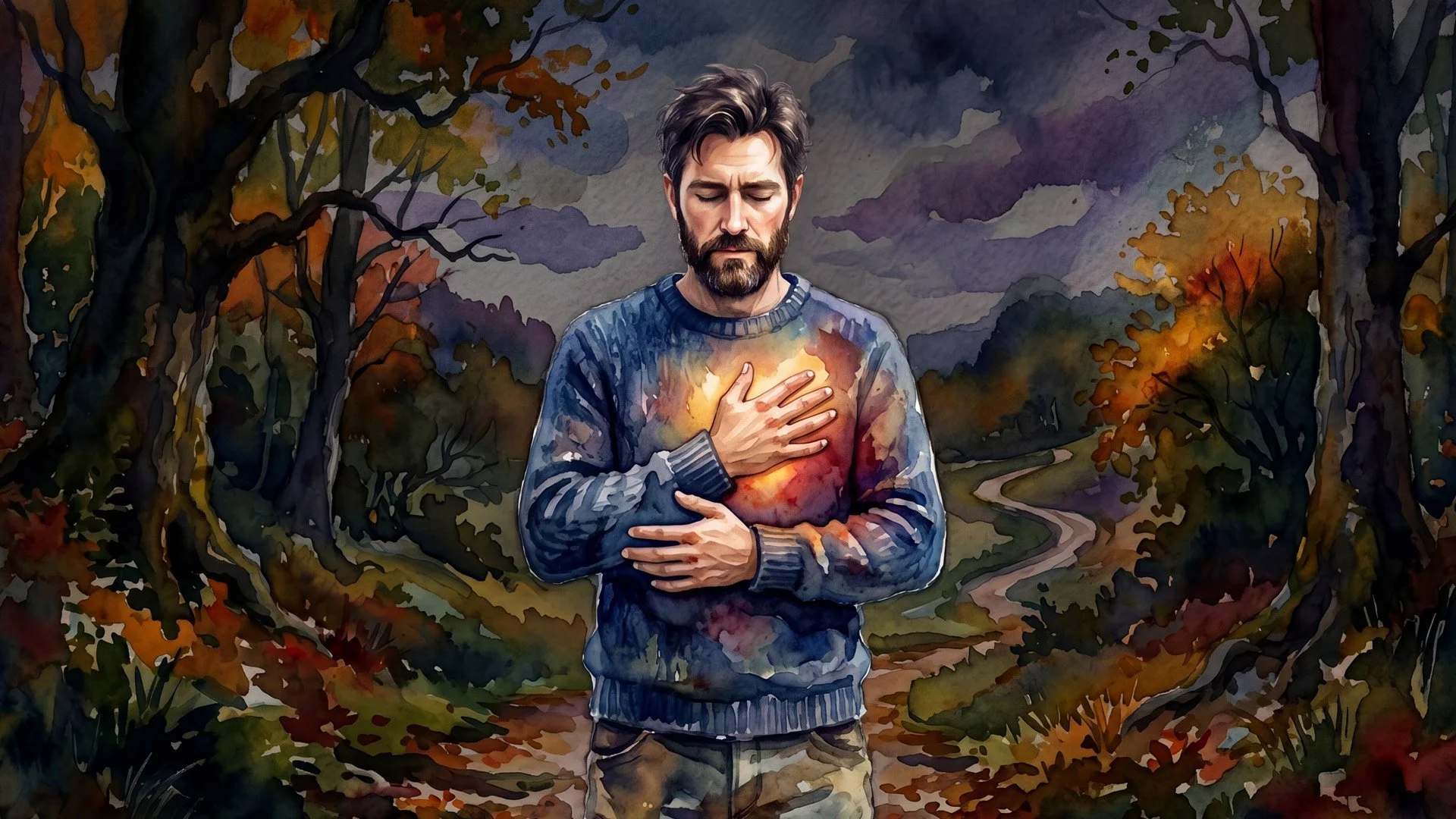
As a culture we’ve become increasingly focused on our external appearance and presentation at the expense of knowing what’s really going on inside. Emotions are suppressed, spiritual life becomes secondary, and the condition of the heart is overlooked. Leadership, relationships, and decision-making all flow from the heart. If the heart is neglected, even the most capable man will struggle. To live with strength and consistency, a man must learn to guard his heart—developing both emotional and spiritual resilience that allows him to remain steady under pressure.
The heart is the source. Proverbs 4:23 offers a clear instruction: “Above all else, guard your heart, for everything you do flows from it.” The condition of a man’s heart determines the trajectory of his actions, relationships, and leadership. Guarding the heart is not about isolation or emotional detachment; it is about intentional awareness. We need a keen awareness of what influences thoughts, attitudes, and desires. In practical terms, this means paying attention to what is allowed into the mind—media, conversations, and environments that shape our thinking.
It also means addressing internal struggles rather than ignoring them. Unresolved anger, discouragement, or insecurity does not remain contained; it eventually surfaces in behavior. A man who guards his heart takes responsibility for his inner world, understanding that leadership begins long before any outward action is taken.
Process what’s inside. Today’s men have been conditioned to avoid emotional vulnerability, equating it with weakness. As a result, they carry stress, frustration, or pain without addressing it. This leads to burnout, withdrawal, or reactive behavior. Everything is just fine—until it’s not and a man explodes. Scripture provides a better way. In Psalm 42:11, the writer speaks openly about himself: “Why, my soul, are you downcast? Why so disturbed within me? Put your hope in God.” The psalmist does not deny his emotions; he acknowledges them and then anchors himself in truth.
For today’s men, this principle is critical. Emotional resilience is not eliminating feelings, but managing them in a way that aligns with faith. We must identify what is happening internally, bringing it before God in prayer, and allowing His truth to shape our response. This prevents emotions from becoming controlling forces and instead integrates them into a mature, balanced life.
Building spiritual habits. Jesus modeled this repeatedly, often withdrawing to pray to the Father, even in the midst of demanding circumstances. In Matthew 26:41, He instructs His disciples, “Watch and pray so that you will not fall into temptation. The spirit is willing, but the flesh is weak.” Without regular connection to God, a man’s resolve will weaken under pressure. Spiritual disciplines such as prayer, Bible study, and reflection are not optional add-ons—they are essential for maintaining spiritual clarity and strength. These practices condition a man to respond thoughtfully rather than react impulsively. They build a foundation that supports stability in both calm and challenging seasons.
An accountable community. Isolation can undermine even the strongest intentions. Men often attempt to handle challenges on their own, believing that independence is a sign of strength. The Bible instead emphasizes the value of shared support. Ecclesiastes 4:9-10 reminds us, “Two are better than one… If either of them falls down, one can help the other up.” This principle applies to emotional and spiritual struggles. Trusted relationships provide perspective, encouragement, and correction when needed. A man needs a trusted peers with which he can be honest without fear of judgment. In practical terms, this may involve a small group, a mentor, or a few close friends who share a commitment to growth. These connections act as a safeguard, helping a man guard his heart so that small issues don’t become larger problems.
Guarding the heart is a daily practice. A man’s influence is only as strong as the condition of his heart. When the heart is healthy, leadership is strengthened, relationships are deepened, and decisions are grounded in wisdom.Emotionaland spiritual resilience are not about perfection—they are about stability. They enable a man to live and lead with purpose, even in the face of difficulty. By guarding his heart, he positions himself to experience not only personal growth but also a lasting impact on those around him.







Cover image: Adobe Firefly AI
To live with strength and consistency, a man must learn to guard his heart—developing both emotional and spiritual resilience that allows him to remain steady under pressure.